How Food Tells the Story of Culture Traditions and Identity
A plate of food can carry more history than a monument. It can hold a migration route, a religious belief, a memory of harvest, a family rule, a festival, a loss, and a homecoming. Long before a story is written down, it is often cooked, served, shared, and remembered.
Food is one of the most intimate ways culture survives. People may move countries, change languages, or adopt new customs, but a familiar dish can bring them back to where they came from. The smell of tadka hitting hot oil, the shape of handmade dumplings, the slow stirring of a stew, or the first bite of festival sweets can say, “This is who we are.”
That is why the link between food and culture is so rich. Traditional dishes do not simply feed people. They teach history, express identity, mark sacred time, and bring communities together.

Traditional dishes carry memory across generations
Most traditional dishes began as practical answers to everyday life. People cooked what the land gave them, what the climate allowed, and what their work demanded. Over time, those practical meals became markers of belonging.
Take khichdi in India. At its simplest, it is rice and lentils cooked together. Yet it means different things in different homes. For some, it is comfort food eaten when unwell. For others, it is part of harvest celebrations, temple offerings, or a light meal after heavy festival eating. The same basic dish changes with ghee, spices, vegetables, regional grains, and family habits.
In Italy, pasta tells a similar story. Each region has its own shapes, sauces, and rules. Orecchiette from Puglia reflects handmade skill and local wheat. Tagliatelle in Emilia-Romagna pairs with slow-cooked ragù. Pasta is not one thing. It is a map of local pride.
Japanese miso soup also shows how daily food can hold cultural meaning. It may seem simple, but it reflects ideas of balance, seasonality, and care. The ingredients change with the region and the household. A bowl might include tofu, seaweed, mushrooms, clams, or seasonal greens. Its quiet regularity makes it powerful.
In many cultures, the dishes that survive longest are not always grand or expensive. They are often the foods made again and again at home. They become edible memory.
Ingredients tell stories of land, trade, and migration
Every cuisine carries traces of geography. Coastal communities often build meals around fish, coconut, seaweed, or shellfish. Mountain communities may rely on fermented foods, preserved meats, grains, and dairy. Dry regions develop clever ways to use pulses, flatbreads, spices, and pickles.
But cuisines are never frozen in place. They change when people travel, trade, invade, marry, settle, or flee.
The chilli is now central to Indian, Thai, Korean, Mexican, and many African cuisines, but it travelled from the Americas after global trade routes expanded. Today it is hard to imagine Andhra pachadi, Thai curry, kimchi, or jollof rice without chilli heat. One ingredient moved across oceans and changed the taste of entire regions.
The biryani is another example of culture in motion. It draws from Persianate cooking traditions, local rice cultures, royal kitchens, trading cities, and home cooks. Hyderabadi, Kolkata, Malabar, Lucknowi, and Sindhi biryanis all carry their own signatures. Potatoes, dried plums, coconut, fried onions, saffron, rose water, and local spice blends all tell us where the dish has travelled and who adopted it.
In the Caribbean, dishes such as jerk chicken, callaloo, rice and peas, and roti show the meeting of Indigenous, African, Indian, European, and Chinese influences. These foods reflect painful histories too, including slavery and indenture. Yet communities transformed hardship into survival, flavour, and cultural strength.
Food can make history visible without a textbook. A spice, grain, cooking vessel, or method can reveal centuries of contact.
Food expresses identity in everyday life
Food is one of the first ways people learn who they are. Children absorb culture through lunch boxes, kitchen smells, family sayings, and the different foods served on ordinary days and special days.
A person may say they are Punjabi and think of makki di roti with sarson da saag. Someone from Tamil Nadu may think of sambar, rasam, idli, dosa, and filter coffee. A Bengali may describe identity through fish curry, rice, mustard oil, and mishti. A Goan Catholic family may speak of sorpotel, sannas, vindaloo, or bebinca. Each example is more than a menu. It is language, climate, faith, class, memory, and place.
Food can also become a way to hold on to identity in a new country. Migrant families often recreate familiar tastes with unfamiliar ingredients. A grandmother may substitute one green for another. A student abroad may make dal in a rice cooker. A family may bring masalas in suitcases or learn where to find plantains, tamarind, or cassava in a new neighbourhood.
These small acts matter. They say, “We can adapt without losing ourselves.”
At the same time, identity through food is not always neat. Many people grow up with mixed food cultures. A home might serve rajma chawal one day, noodles the next, and Christmas cake in December. That mix is not a loss of authenticity. It is real life.
Culture is not a museum shelf. It is a kitchen in use.
Celebrations turn meals into shared meaning
Special foods often mark special time. They tell people that a day is different from other days.
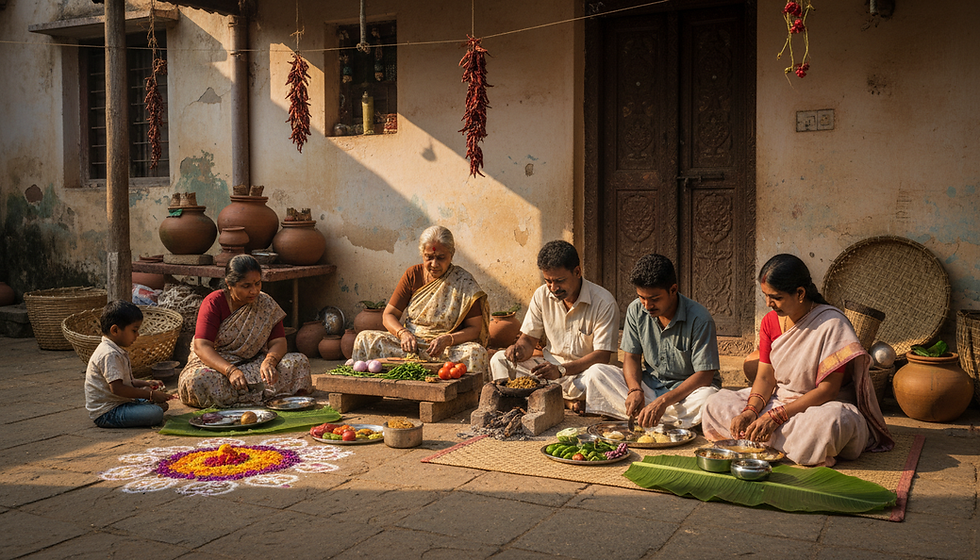
During Diwali, sweets and savouries bring families, neighbours, and friends into a shared mood of generosity. Laddoos, barfis, chaklis, karanjis, and regional snacks vary from home to home, but the act of sharing remains central.
During Eid, many families prepare sheer khurma, biryani, kebabs, sewaiyan, or local festive foods. The meal often follows fasting, prayer, charity, and visits. Food becomes part of gratitude and kinship.
At Christmas, dishes shift across regions. In Kerala, appam and stew may sit beside plum cake. In Goa, sweets such as neureos, kulkuls, and bebinca carry local memory. In parts of Europe, roast meats, breads, puddings, and spiced drinks mark winter traditions. Across the world, Christmas food reflects both faith and local ingredients.
Lunar New Year meals in China and across East Asian communities often include foods chosen for symbolic meaning. Dumplings may suggest prosperity through their shape. Long noodles can symbolise long life. Fish may carry an idea of abundance. The food speaks through taste, sound, and visual form.
In Mexico, Día de los Muertos includes pan de muerto, sugar skulls, tamales, mole, fruit, and favourite foods placed on altars. The meal connects the living and the dead. It treats remembrance as something warm, sensory, and shared.
Here is how food often functions during celebrations:
Occasion | Food’s role | Example |
Harvest festivals | Thanking the land and sharing abundance | Pongal in Tamil Nadu, Onam sadya in Kerala |
Religious observances | Marking faith, fasting, gratitude, and charity | Iftar meals, langar, prasad |
Family milestones | Bringing generations together | Wedding feasts, naming ceremonies, birthday meals |
Remembrance rituals | Honouring ancestors and memory | Día de los Muertos offerings, ancestral food rituals |
Seasonal festivals | Welcoming change in weather and crops | Mooncakes, winter stews, festive breads |
The dishes differ, but the pattern is familiar. Food gives emotion a form.

Rituals give food deeper meaning
Some foods are prepared in specific ways because the method matters as much as the result. Ritual turns cooking into an act of respect.
In Sikh gurdwaras, langar offers a powerful example. People cook, serve, and eat together regardless of background. The meal is simple, but its meaning is profound. It reflects equality, service, humility, and community.
In Hindu homes and temples, prasad is not just food. It is offered first to the divine, then received as grace. The dish may be fruit, sweets, pongal, halwa, chana, or something local to the region. The meaning comes from intention and sharing.
In Jewish tradition, challah for Shabbat marks sacred time. The braided bread, blessings, wine, and family meal help separate the day of rest from the working week. During Passover, symbolic foods on the seder plate tell the story of liberation, memory, and faith.
In Ethiopian and Eritrean meals, injera often sits at the centre. People eat from a shared platter, using pieces of injera to scoop stews and vegetables. The form of eating encourages closeness. The bread is plate, utensil, and food at once.
Ritual food also teaches patience. Fermentation, slow cooking, grinding, soaking, hand-rolling, and layering all ask for time. These steps connect the cook to older ways of living, even in a modern kitchen.
Community bonding begins around the table
A shared meal can soften distance between people. It creates a reason to sit, talk, listen, and take care of one another.
In many Indian homes, guests are offered food before any serious conversation begins. Tea, snacks, fruit, or a full meal can become a language of welcome. The question “Have you eaten?” often means more than concern for hunger. It can mean affection, responsibility, and belonging.
Potluck meals in many parts of the world work in a similar way. Each person brings something from home, and the table becomes a collection of stories. One dish may carry a grandmother’s recipe. Another may come from a newly adopted city. Another may be a quick modern version of an old favourite.
Street food also builds community. Think of chaat stalls in Delhi, vada pav in Mumbai, kottu roti in Sri Lanka, tacos in Mexico, satay in Indonesia, or falafel in the Middle East. People gather around carts, counters, and small shops. Food becomes part of public life.
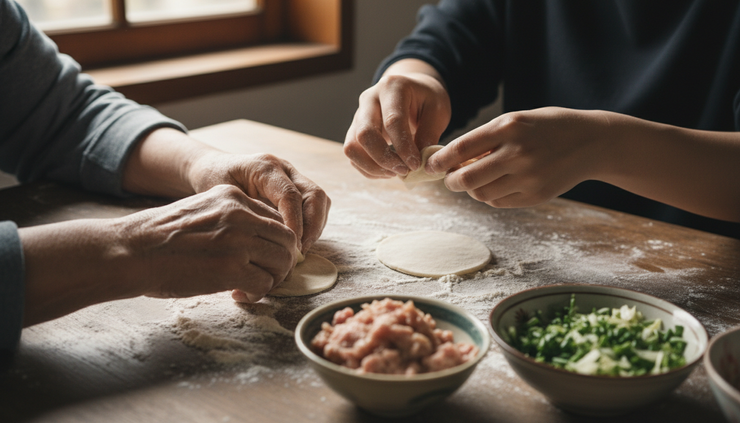
Cooking together can bond people even more deeply than eating together. Kneading dough, wrapping tamales, rolling modaks, folding momos, grinding masala, or stirring a large pot for a feast turns labour into connection. Stories come out while hands stay busy.
A recipe is often a relationship in written form. It says who taught whom, who changed what, and who still remembers.
Traditional food changes, and that is part of culture too
People often worry that a dish is no longer “authentic” if it changes. Yet traditional food has always changed. Climate changes. Trade changes. Technology changes. Families change. The meaning of a dish can remain strong even when the method shifts.
Pressure cookers changed dal. Refrigerators changed pickling and leftovers. Mixers changed chutneys and batters. Migration changed ingredients. Restaurants changed presentation. Social media has changed how people discover regional foods, though the deepest learning still happens at home and in local communities.
This does not mean anything goes. Some changes erase meaning when they ignore context or turn sacred foods into trends without respect. A thoughtful approach asks better questions:
Who made this dish before me?
What does it mean in its original setting?
Am I giving credit to the people and culture behind it?
Am I listening before adapting?
Respect does not stop creativity. It gives creativity roots.

What we learn when we listen to food
Food teaches that identity is layered. A dish can be local and global, ancient and new, personal and shared. It can carry joy, grief, migration, faith, resistance, and comfort in the same serving bowl.
The next time you eat a traditional dish, pause for a moment. Ask where the ingredients came from. Ask who taught the recipe. Ask why it appears at a certain festival, wedding, prayer, or season. Ask what changed when the family moved, when a new generation cooked it, or when money was short.
Then share your own story. Talk to a parent, grandparent, neighbour, friend, or community elder about a dish that shaped them. Write down the recipe if they are willing. Note the small details, such as “cook until it smells right” or “add more water if the rice is new.” Those lines often hold the soul of the dish.
Food keeps culture alive because people keep making it, serving it, and telling the stories that come with it. Every meal has the chance to become memory. Every shared recipe can become an inheritance. And every table can become a place where identity is honoured, one plate at a time.


Comments