Celebrating Culture Through Simple Moments
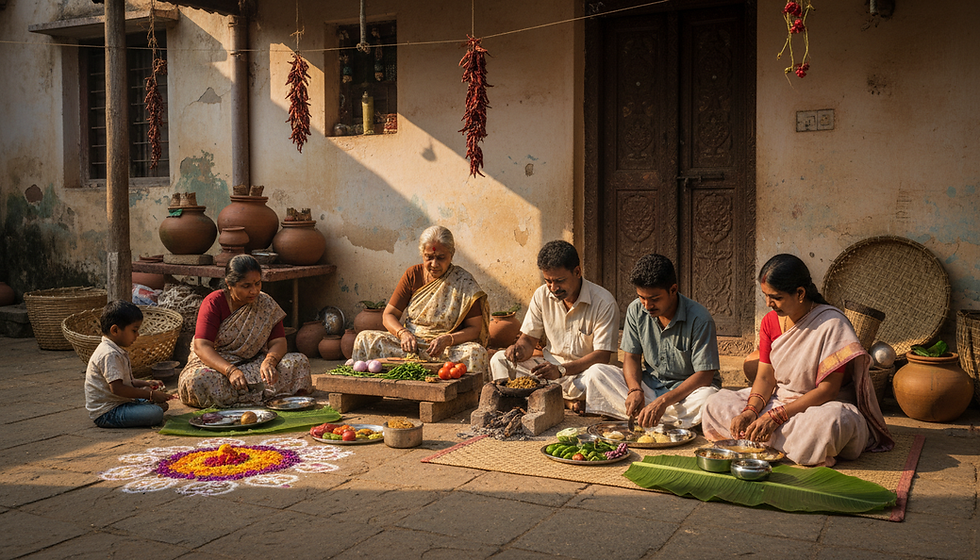
Culture is often described through grand festivals, famous monuments, classical art, and historic rituals. Yet for most people, culture lives in smaller places. It sits in the smell of tadka in the kitchen, the way elders bless children before an exam, the rangoli outside a doorway, the lullaby remembered from childhood, and the tea shared with a neighbour on a rainy evening.
These moments may look ordinary, but they carry memory. They tell us where we come from, how we care for one another, and what we choose to pass on.
Celebrating culture does not always need a big event. It can begin with one meal, one song, one story, one greeting, or one handmade thing. When we pay attention to these simple moments, culture feels close, warm, and alive.

Culture begins at home
Home is often the first place where culture is learned. A child may not know the meaning behind every custom, but they notice patterns. They see how lamps are lit in the evening. They hear certain words spoken with respect. They watch family members remove footwear before entering a prayer room. They learn which dishes appear during which season.
These habits become part of memory.
A home does not need to look traditional to carry culture. A small flat in Pune, a house in Kochi, a rented room in Delhi, or an apartment in Bengaluru can all hold deep cultural meaning. Culture is not limited to old houses or perfect festival photographs. It lives wherever people continue a practice with care.
Some simple home moments that carry culture include:
Folding hands in greeting
Offering water or tea to a guest
Cooking a recipe taught by a parent or grandparent
Speaking in a mother tongue at the dining table
Keeping a small corner for prayer, reflection, or gratitude
Wearing traditional clothes on special days
Playing old songs during cleaning, cooking, or travel
These are not small because they lack value. They are small because they fit into daily life. That makes them powerful.
Culture survives best when it becomes part of ordinary routines.
Food is one of the easiest ways to remember
Food carries culture in a way few things can. A single dish can hold geography, family history, weather, religion, migration, and memory.
Think of a festive sweet prepared only once a year. Think of mango pickle stored in glass jars. Think of steamed idlis wrapped in cloth, litti cooked over coal, sarson ka saag in winter, appam with stew, thepla packed for a long train journey, or biryani made for a celebration. Each dish says something about place and people.
Food also invites participation. Someone washes the rice. Someone grinds the masala. Someone tastes the salt. Someone remembers how their grandmother used to make it. A recipe may change over time, but the act of cooking together keeps the connection alive.
The beauty of food culture is that it does not demand perfection. A first attempt at making modak may look uneven. A family recipe may be adjusted for a gas stove, a mixer-grinder, or a smaller kitchen. That is fine. Culture is not a museum piece. It adapts.
A simple way to celebrate food culture is to choose one dish and learn its story.
Ask:
Who in the family made it often?
Was it linked to a festival, season, or life event?
Which ingredient made it special?
What changed when the family moved to another city?
What memory does the dish bring back?
A meal becomes more meaningful when the story is served with it.
Language keeps memories alive
Language is more than grammar. It carries humour, affection, respect, and emotion. Some feelings are best expressed in the language in which they were first learned.
A grandmother’s saying, a local proverb, a childhood nickname, a folk song, or a simple blessing can hold more warmth than a perfect translation. Even when people move away from their hometowns, language helps them feel connected.
Many Indian families speak more than one language. A person may study in English, speak Hindi or another common language outside, and use Tamil, Bengali, Marathi, Gujarati, Malayalam, Punjabi, Kannada, Telugu, Odia, Assamese, Urdu, Konkani, or another language at home. This mix is natural. It reflects real life.
Celebrating language can be simple:
Use mother-tongue words for food, relationships, and emotions
Teach children common greetings and blessings
Write down old sayings before they are forgotten
Sing songs from childhood
Record elders telling stories, with their permission
Read poems, folk tales, or simple books in a regional language
There is no need to speak perfectly to value a language. Even a few words, used with love, can keep a bond alive.

Clothing can carry pride without needing a grand occasion
Traditional clothing is often saved for weddings, festivals, and ceremonies. Yet wearing cultural clothes in simple settings can feel just as special.
A cotton saree on a regular workday, a kurta for a family lunch, a dupatta with hand embroidery, a mundu during a home gathering, a phiran in winter, or a pair of juttis with everyday clothes can be a soft reminder of identity. These choices do not need to be dramatic. They can be comfortable, personal, and practical.
Clothing also carries craft. Handloom, block printing, mirror work, chikankari, phulkari, kantha, ikat, bandhani, kasavu, ajrakh, and many other traditions reflect the skill of artisans. When people wear and care for these pieces, they keep those skills visible.
A simple cultural wardrobe does not need many items. It may include:
One well-loved outfit from a family elder
A handloom dupatta or stole
Jewellery worn during family events
A regional textile used as a shawl, saree, or wall hanging
A festival outfit that is repaired and reused
Repairing, repeating, and preserving clothes also respects the work behind them. A blouse altered for a younger cousin or a saree turned into a kurta still carries memory.
Culture grows when old things are allowed to live in new ways.
Festivals are made of small acts
Festivals often appear large from the outside. Lights, music, special food, guests, and rituals make them look grand. But the heart of a festival is usually made of small acts.
Someone wakes up early to clean the house. Someone strings flowers. Someone soaks lentils the night before. Someone checks if enough oil is left for lamps. Someone folds new clothes and places them carefully on a chair. Children ask questions. Elders give instructions. The house slowly changes mood.
These small acts create anticipation.
During Diwali, the moment of lighting the first diya can feel as meaningful as the fireworks outside. During Eid, the first greeting after prayer carries tenderness. During Christmas, placing a star at the window can bring back years of memory. During Pongal, Bihu, Onam, Navroz, Gurpurab, Durga Puja, Janmashtami, or any other celebration, the smallest details often stay in the heart longest.
Festivals also teach community. Neighbours exchange sweets. Friends visit across faiths. Children learn that joy can be shared. A plate of food sent next door may say more than a long speech.
The point is not to perform culture for others. The point is to feel connected while practising it.
Stories from elders are living archives
Every family has stories. Some are funny. Some are painful. Some are repeated so often that everyone knows the ending. These stories are part of culture because they explain how people lived, moved, struggled, celebrated, and changed.
An elder may speak about a village well, a first train journey, a flood, a wedding meal, a school teacher, a lost house, a favourite market, or a festival before electricity reached the area. Such stories may not appear in textbooks, but they matter.
Listening is one of the simplest cultural acts.
It does not require a special setting. It can happen while cutting vegetables, having tea, sitting on a balcony, travelling by bus, or sorting old photographs.
To make these conversations easier, ask gentle questions:
What did festivals look like when you were young?
Which food do you miss from your childhood?
What games did children play outside?
Which song was popular in your home?
What did people wear for weddings?
What advice did your parents often give?
Not every story needs to be recorded. Some are meant only for the moment. Still, writing down a few names, places, and memories can help future generations understand their roots.

Daily rituals bring calm and connection
Rituals do not always have to be religious. They can be personal, seasonal, or family-based. A ritual is any repeated act done with meaning.
A family may eat together every Sunday. A person may water a tulsi plant each morning. Someone may light incense before starting housework. A child may touch a book to the forehead if it falls on the floor. A family may call relatives on the first day of every festival. These acts shape rhythm.
Rituals give people a sense of continuity. They say, “This is how we begin,” or “This is how we show respect,” or “This is how we remember.”
Simple rituals also help culture remain gentle rather than heavy. They do not need pressure or fear. When shared with kindness, they become comforting.
A few easy cultural rituals for everyday life include:
Making one traditional breakfast each week
Calling an elder in the mother tongue
Lighting a lamp or candle at a fixed time
Keeping a seasonal flower at home
Playing regional music while cooking
Sharing one childhood story at dinner
Teaching children the meaning behind one custom at a time
The meaning matters more than the scale. A single lamp can hold a whole feeling.
Culture changes, and that is natural
Every generation changes culture in some way. This can worry people, especially when old practices fade. But change does not always mean loss. Sometimes it means culture is finding a new shape.
A family that once gathered in one village may now meet over long-distance calls. A recipe once made on a wood fire may now be cooked in a pressure cooker. A song once learned in a courtyard may now be learned from a recording. A festival once celebrated with many relatives may now be marked by a small meal in a city flat.
The form changes, but the feeling can remain.
The key is to keep asking what the practice means. If the meaning is gratitude, respect, joy, remembrance, hospitality, or togetherness, then the practice can adapt without becoming empty.
For example, a person living alone may celebrate a festival by cooking one family dish, wearing a familiar textile, and calling home. That is still a celebration. A family with members from different regions may combine customs from both sides. That can create a richer home culture. A child growing up away from their ancestral place may still feel connected through stories, songs, and visits.
Culture is strongest when it allows people to belong without forcing them to be perfect.
Small public moments matter too
Culture is not limited to private homes. It appears in public life in quiet ways.
It is in the flower seller arranging marigolds before sunrise. It is in the sweet shop preparing fresh jalebi. It is in temple bells, azaan, church choirs, gurdwara langar, monastery chants, folk performances, and local fairs. It is in street food, hand-painted signs, regional theatre, classical concerts, village sports, and seasonal markets.
These public moments remind people that culture is shared. One does not need to belong to every tradition to respect it. Watching with care, asking polite questions, and joining when invited can build understanding.
India’s cultural life is wide and layered. Each region has its own rhythms, and many communities live side by side. A simple walk through a market before a festival can show this beautifully. Shops fill with different foods, fabrics, flowers, lamps, baskets, and decorations. Each item carries someone’s skill and someone’s memory.
Respect begins with attention.
Children learn culture through joy
Children absorb culture best when it feels joyful, not forced. They remember the smell of sweets, the sound of songs, the comfort of being included, and the fun of helping.
If culture is taught only through rules, it can feel heavy. If it is shared through stories, food, craft, music, and affection, it becomes something children want to carry.
Simple ways to include children include:
Let them place flowers or lamps safely
Teach one short song or prayer with meaning
Invite them to help roll laddoos or shape dough
Tell them why a festival is celebrated
Show them old family photographs
Let them ask questions without shame
Encourage them to speak a few words in a family language
Children do not need to understand everything at once. Repetition teaches gently. One day, the same child may recreate those moments for someone else.

A simple way to celebrate culture this week
Celebrating culture can start with one small choice. Pick something that feels real, not something done only for display.
Here are a few gentle ideas:
Cook one family dish and ask about its story
Call an elder and listen without rushing
Wear a traditional textile on an ordinary day
Teach a child one word from a family language
Light a lamp, candle, or incense with a moment of gratitude
Play songs from your region while doing chores
Visit a local market and notice seasonal items
Write down one memory connected to a festival
Share food with a neighbour
Repair or reuse an old cultural object instead of discarding it
The aim is not to do everything. Choose one act and do it with attention. That is enough.
Culture becomes meaningful when it is lived, not saved only for perfect occasions. It does not need a stage, a large budget, or a flawless setting. It needs care.
The simple moments matter because they are repeatable. They fit into busy lives. They welcome people in. They keep memory close.
When a recipe is cooked, a story is told, a song is sung, a lamp is lit, or a greeting is offered with warmth, culture continues. Quietly, beautifully, and in a way that belongs to everyday life.


Comments